
Feb 19, 2026
Tracking Bitcoin's Flows
What 13F filings tell us about institutional positioning from peak to pullback.
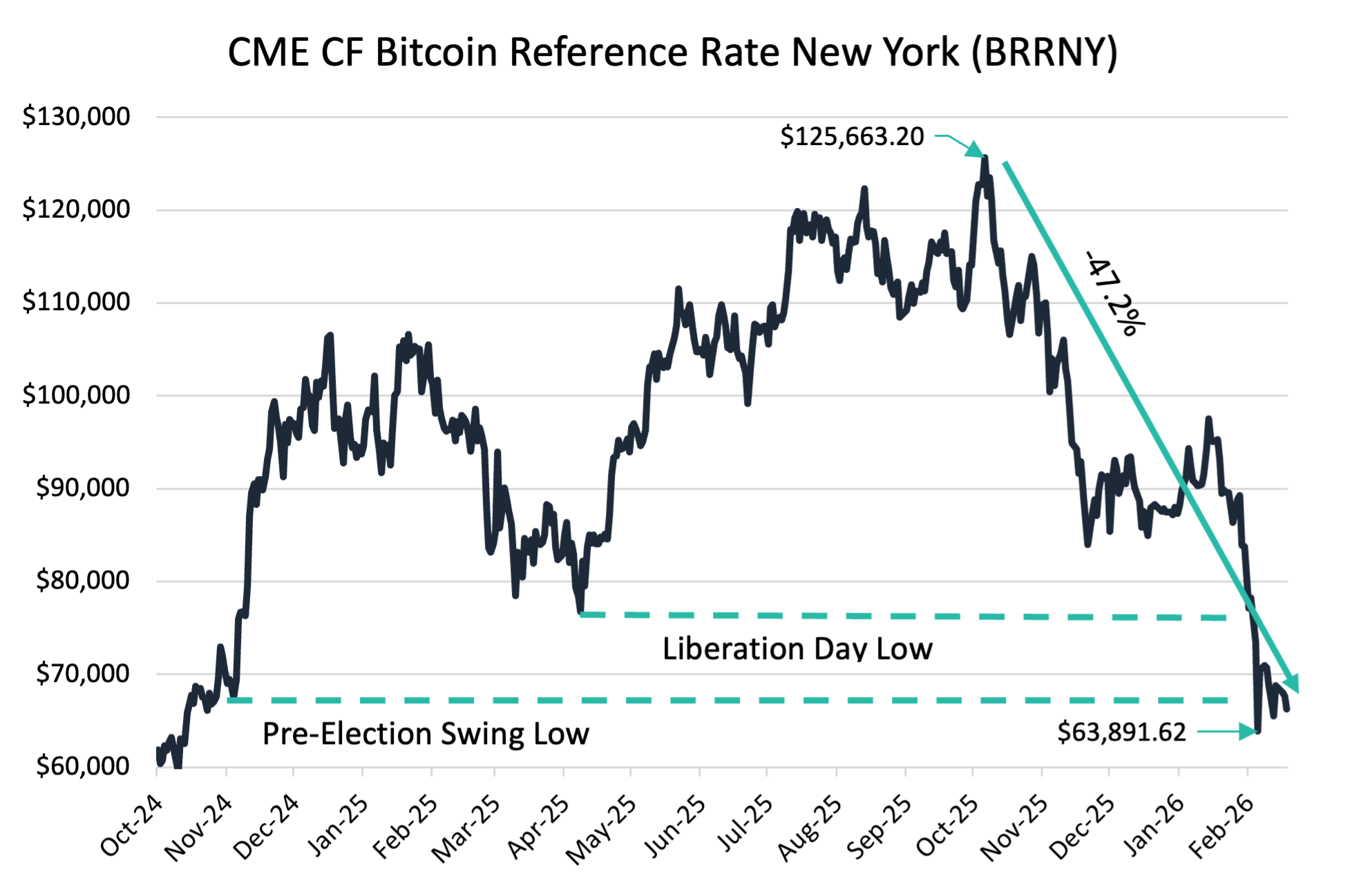
Bitcoin is trading at roughly $67,000 today, down 47% from its all-time high of approximately $126,000 set last October. But behind the price chart is a less visible story playing out in regulatory filings: who is actually holding these shares, and how has that changed as the market moved from euphoria to correction?
We pulled 13F data on the top 40 institutional holders across ten Bitcoin ETF products spanning the six largest spot funds (IBIT, FBTC, BITB, GBTC, ARKB, EZBC), the most popular covered call strategy (BTCI), 2x leveraged long strategies (BITX, BITU), and the only short product with meaningful institutional ownership (SBIT). 13Fs are quarterly disclosure forms filed with the SEC by institutional investment managers with at least $100 million in assets under management, requiring them to report all long equity and ETF positions held at quarter-end. This makes them one of the most comprehensive windows into how professional money is actually deployed. The data covers five quarters from Q4 2024 through Q4 2025, capturing the full arc of the rally, the blow-off top, and the early stages of the drawdown. Here's what it tells us.
Hedge Funds: First In, First Out
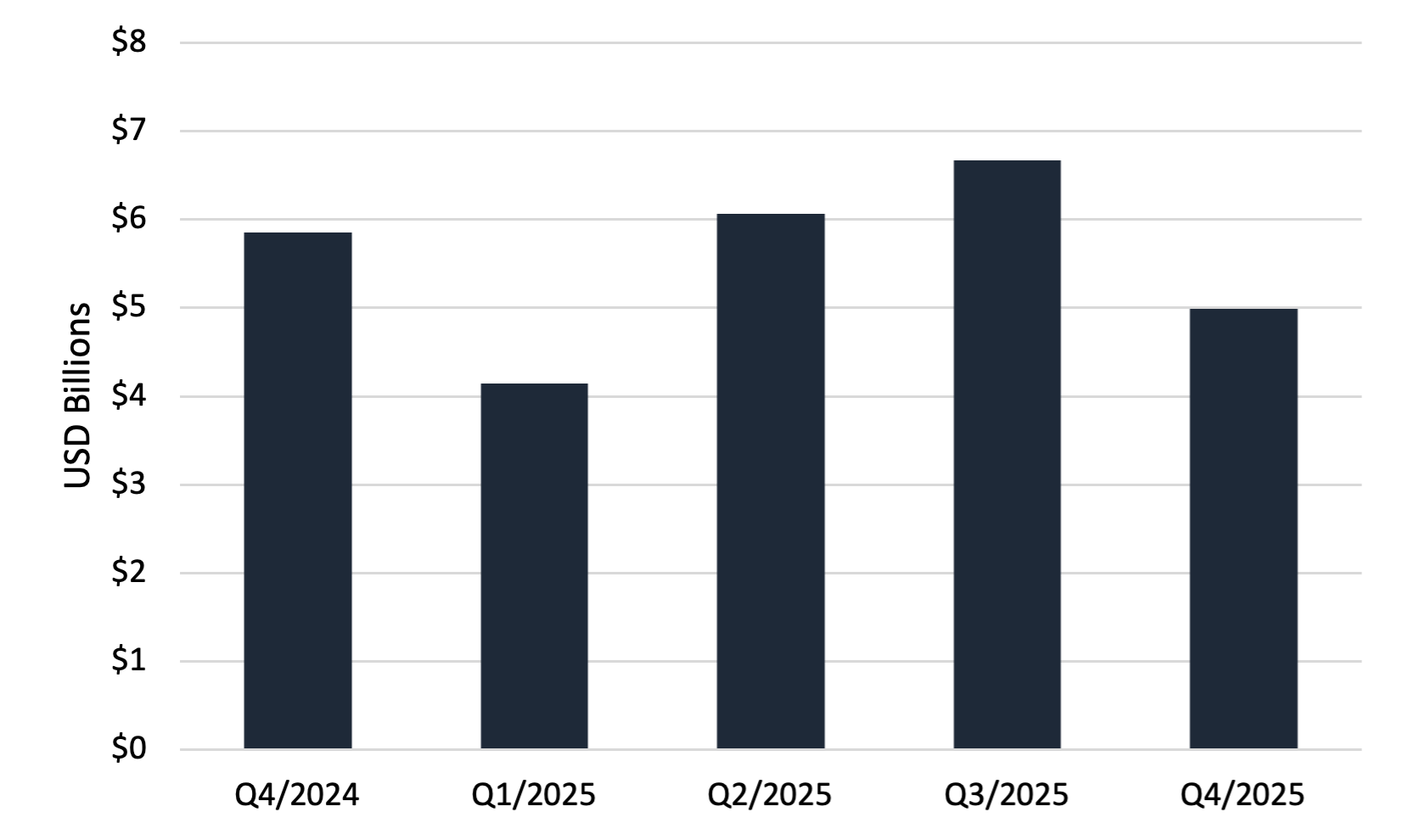
The dominant theme of the last two quarters is hedge fund de-risking. In IBIT alone, aggregate hedge fund holdings among the top holders fell from 114 million shares in Q3 2025 to 82 million by Q4, a 28% cut executed while Bitcoin was still above $90,000. The moves were not subtle. Brevan Howard, once the second-largest holder of IBIT with 37.5 million shares at the Q2 peak, slashed its position to 5.5 million by year-end, an 85% reduction. DE Shaw continued its methodical exit, trimming from 9.7 million shares a year ago to 4.7 million. Symmetry Investments, which held 12.7 million shares throughout most of 2025, disappeared from the top holder list entirely in Q4. Farallon Capital cut its position by 70%.
Hedge Fund Manager - Spot BTC Holdings
The same pattern played out in FBTC. Schonfeld went from 5.5 million shares to 2.3 million. Sculptor Capital dropped from 2.2 million to 224,000. DE Shaw's FBTC position shrank from 4.4 million to 186,000.
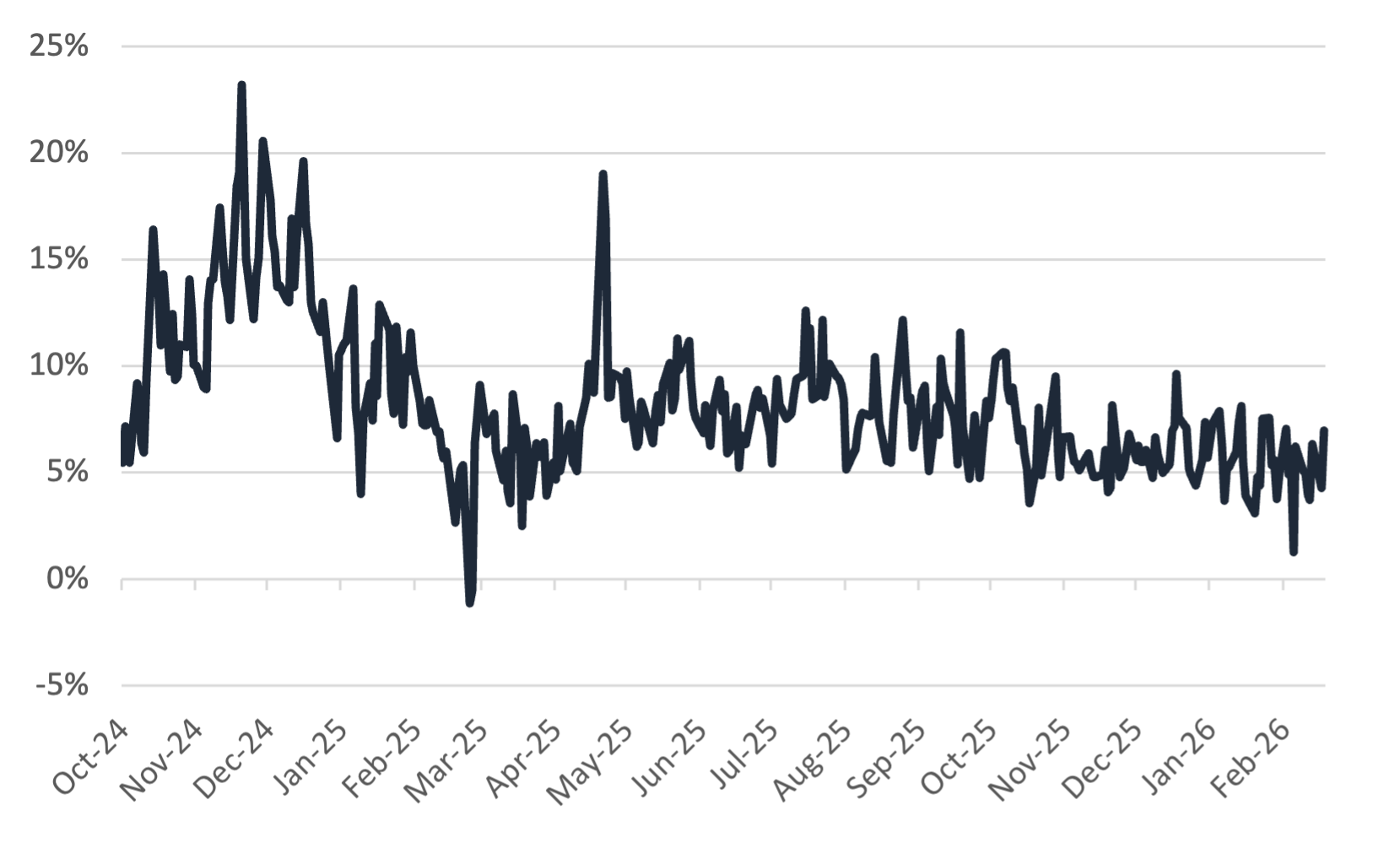
These funds operate with drawdown limits and risk budgets. The October blow-off top appears to have triggered systematic position reductions across the hedge fund complex. Bitcoin basis trading had become one of the most popular strategies in the hedge fund playbook over the prior two years, a near-consensus carry trade that involved holding a long ETF position while simultaneously shorting the equivalent notional in CME Bitcoin futures to capture the premium at which futures trade above spot. At its peak popularity, the strategy attracted billions in capital from multi-strategy platforms and dedicated crypto funds alike, drawn by annualized carry rates that regularly touched 15 to 20% with limited directional exposure (learn more about Bitcoin basis trading here). Additionally, basis compression has occurred alongside Bitcoin's broader deleveraging, as the unwind of leveraged long positions in perpetual and fixed-term futures markets has pushed premiums lower, further eroding the carry available to basis traders. With carry no longer compensating for the operational complexity and margin requirements of maintaining paired positions, the economic rationale for holding the ETF leg diminished, accelerating the unwind and contributing to the sharp reduction in reported ETF holdings across this sophisticated cohort.
CME Bitcon Basis - Front Month Contract (Annualized)
Investment Advisors: Diamond Handing in a Falling Market
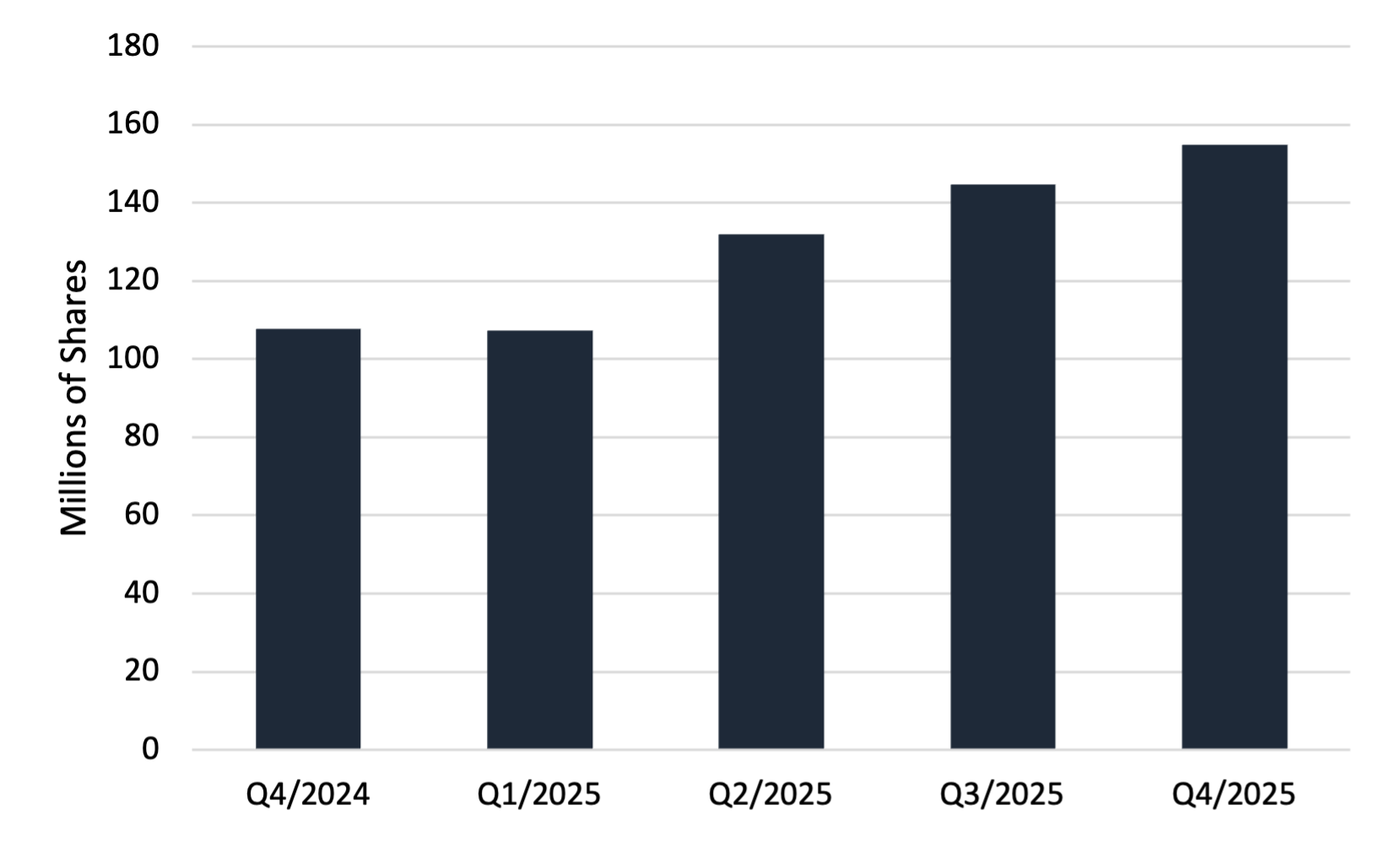
The contrast with the advisory channel could not be sharper. Investment advisors in IBIT grew their aggregate position every single quarter over the past year, from 38 million shares in Q4 2024 to over 93 million by Q4 2025, marking a cumulative increase of 145%. New entrants kept appearing even as prices dropped: ALLARIA FONDOS took a 24.7 million share position in Q4 2025, Laurore Ltd added 8.8 million, and AL Warda Investments steadily built to 8.2 million.
Investment Advisor - Spot BTC Holdings
BlackRock itself provides an instructive case study in its own product. Its proprietary IBIT position grew from 3 million shares to 12.8 million over the same period, a 328% increase, accumulated quarter by quarter with no reductions. Morgan Stanley, holding IBIT in a brokerage capacity on behalf of clients, similarly added every quarter: 4.9 million to 13.4 million shares. LPL Financial followed the same trajectory across multiple products.
It is our view that this reflects how Bitcoin has been absorbed into "model portfolio frameworks". Advisory firms allocating 1 to 3% of client portfolios to Bitcoin don't typically trade around short-term volatility. Inflows from new clients and routine rebalancing create a structural bid that persists regardless of price direction. The advisory channel has effectively become the ballast of the Bitcoin ETF market.
Sovereign Wealth and Endowments: The Quiet Accumulators
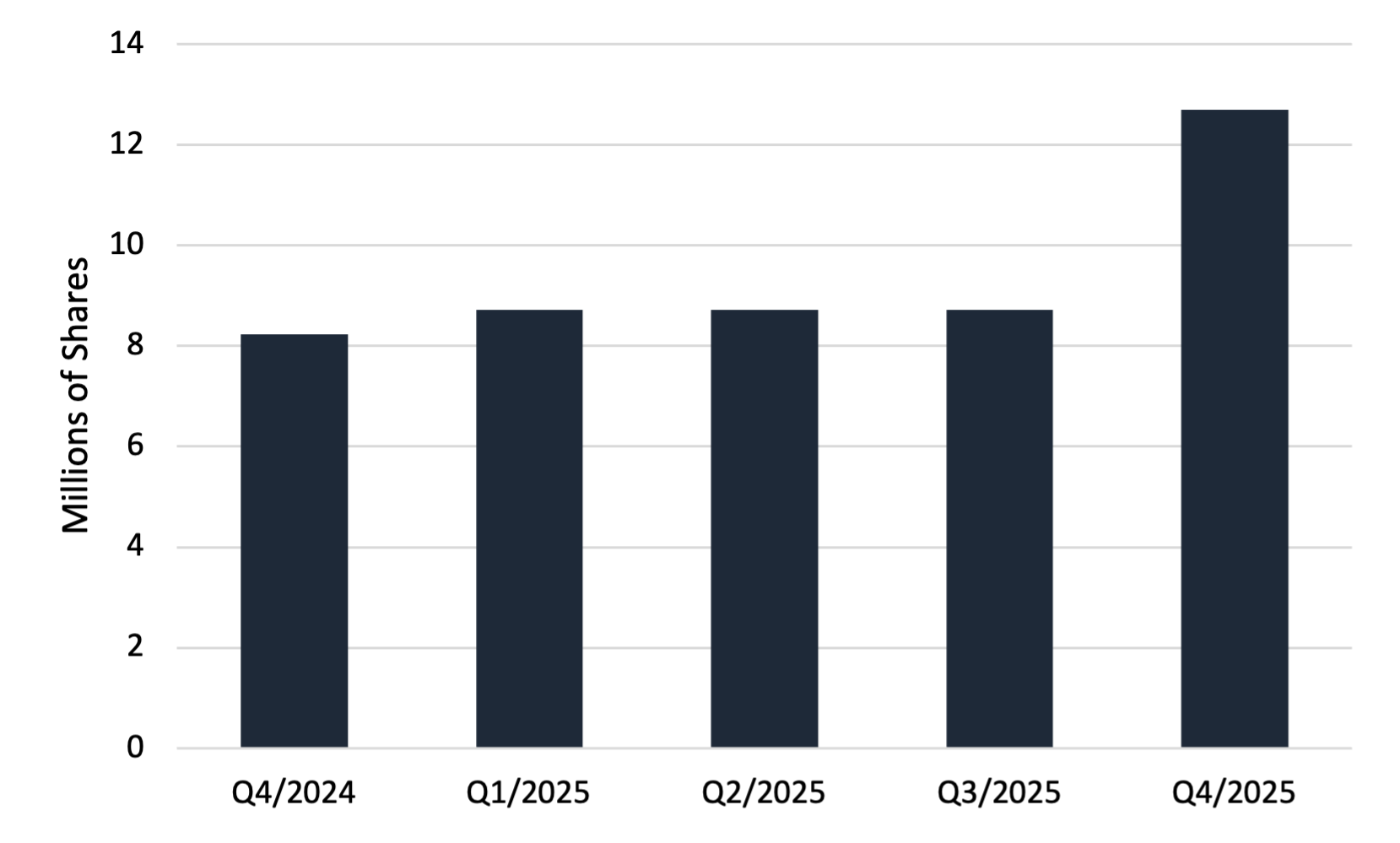
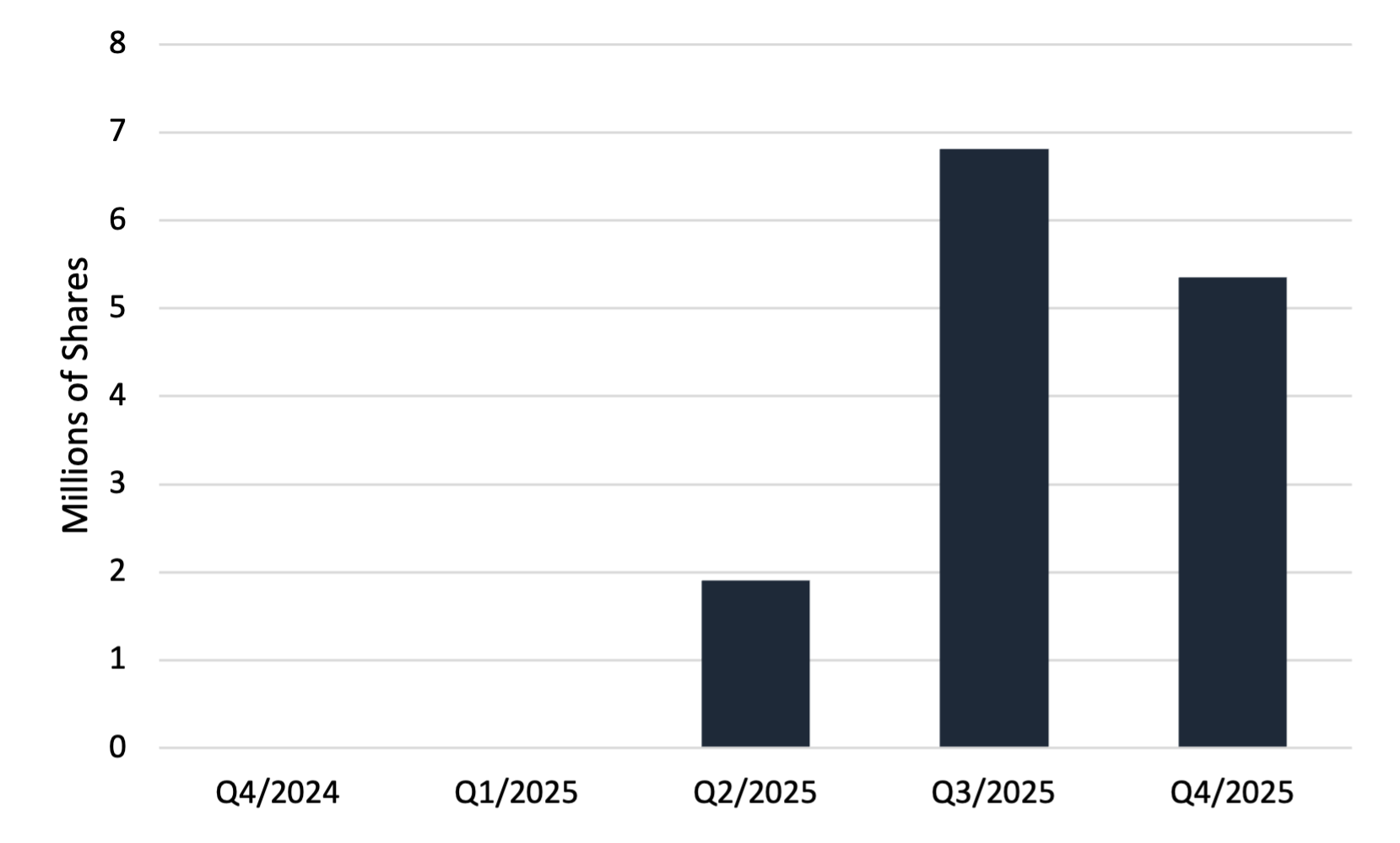
Two of the most notable holders continued to add during the downturn. The Emirate of Abu Dhabi increased its IBIT position by 46% in Q4 2025, moving from 8.7 million to 12.7 million shares, roughly $600 million at quarter-end prices. The position has grown every quarter since it first appeared. Meanwhile, Harvard Management Company, which entered IBIT in Q2 2025, scaled rapidly to 6.8 million shares before trimming modestly to 5.4 million. These are among the most consequential institutional endorsements of Bitcoin as an asset that fits within the Yale model.
Sovereign Wealth Fund - Spot BTC Holdings
Endowment - Spot BTC Holdings
Beyond Spot: Covered Calls, Leverage, and Shorts
The derivative-strategy ETFs have a different investor profile entirely. BTCI, the Neos Bitcoin High Income ETF (a covered call strategy), is almost exclusively owned by small and mid-sized investment advisors, Madden Securities (254K shares), CI Financial (79K), Retirement Planning Group (30K). No hedge funds appear in its top holders. This product is being used primarily as a yield vehicle, not to capture all of Bitcoin's upside, and the holder base grew steadily through the downturn as advisors sought income from harvesting some of Bitcoin's volatility premium (BTCI recorded a 12-month yield in excess of 45% at the time of writing).
Leveraged and Covered Call ETF AUM by Institution Type
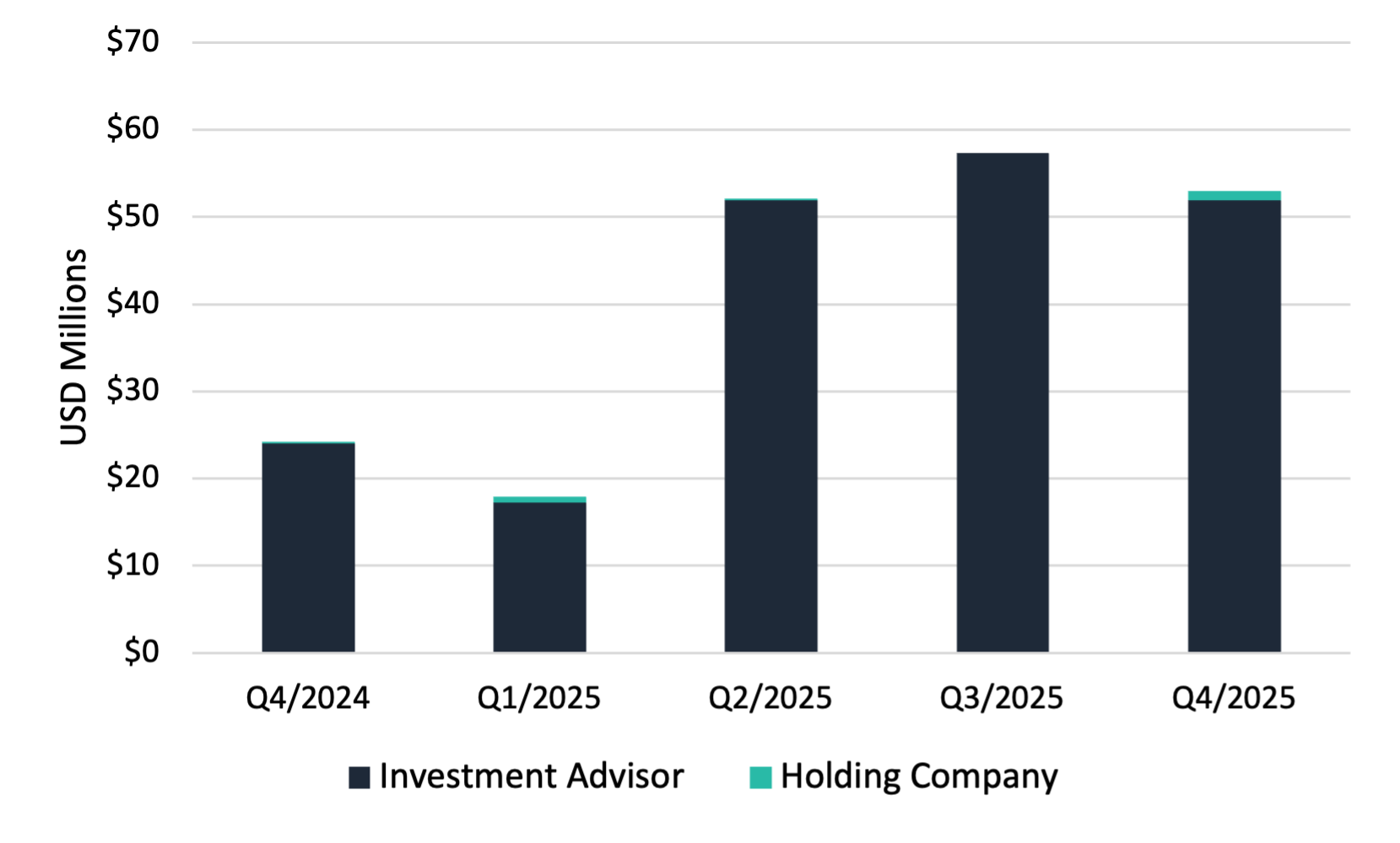
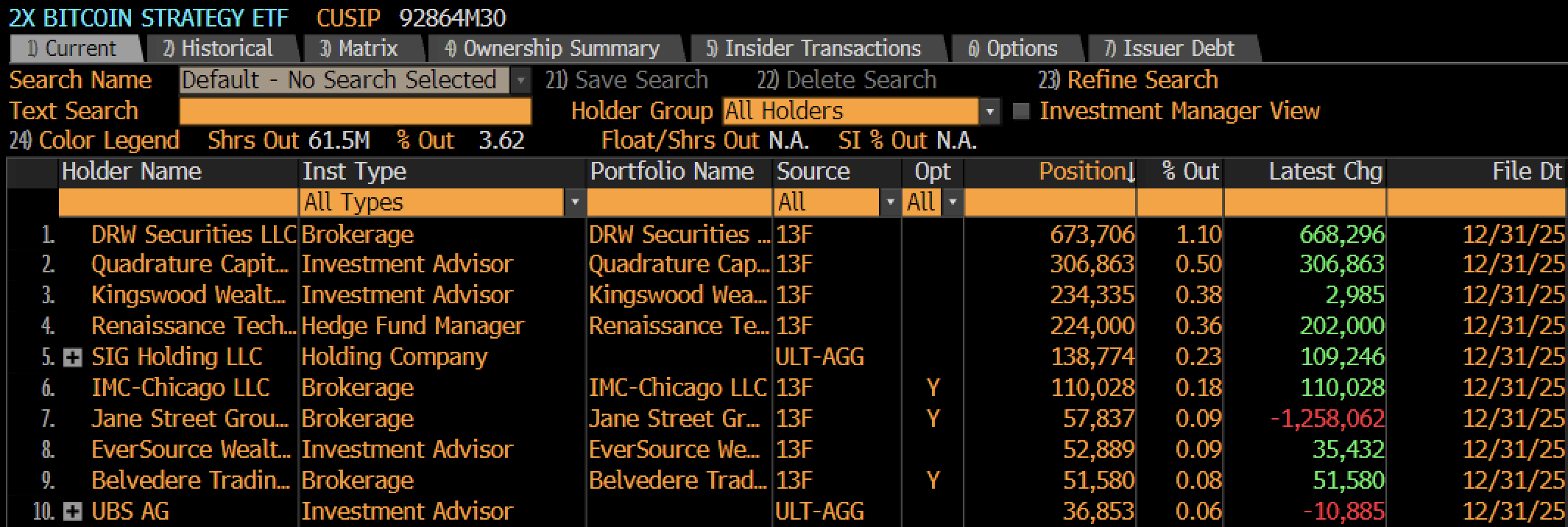
BITX, the 2x leveraged Bitcoin ETF, saw its first hedge fund entrant in Q4 2025 when Quadrature Capital took a 307,000-share position, becoming its largest holder. The rest of BITX's ownership is smaller advisory firms like Kingswood Wealth and EverSource, many of whom have been in the product since its early days. The arrival of a systematic quant fund in the leveraged product is a development worth monitoring.
SBIT, the ultrashort Bitcoin ETF, had virtually no institutional ownership through most of 2025. Then in Q4 2025, Client First Investment Management took a 97,000-share position, $6.4 million at current prices, making it by far the largest holder. Hanetf Management also surged from zero to 48,000 shares. The timing is telling: institutions began building short exposure after the crash was already underway, suggesting these are hedging positions rather than early calls on the top.
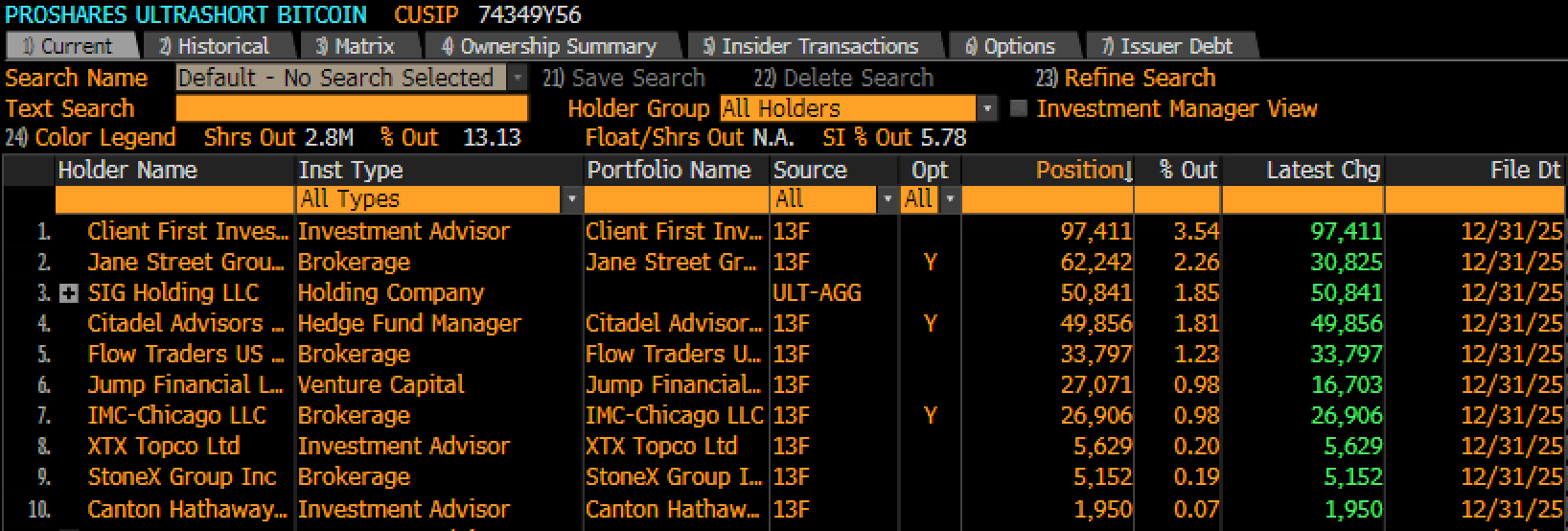
BITU, the ultra-long product, showed a notable pattern of turnover. Newedge Advisors held 66,510 shares through Q3 2025 and exited completely by Q4. Mutual Advisors did the same. But Hanetf Management nearly doubled its position from 16K to 45K shares, and several new advisors (Austin Wealth, Entrewealth, Silverleafe) entered the product for the first time in Q4. The leveraged long products are seeing a rotation from early adopters to new entrants willing to take on amplified exposure at lower price levels.
What the Data Tells Us
The institutional ownership structure of Bitcoin has undergone a meaningful shift over the past year. The speculative capital that powered the rally, hedge funds running basis trades, prop desks arbitraging premiums, has retreated. In its place, a more durable ownership base has formed: advisory firms building permanent allocations, sovereign wealth funds executing strategic reserve policies, and endowments gaining comfort with the asset class.
Spot & Derivative ETF Ownership Breakdown by Institution Type
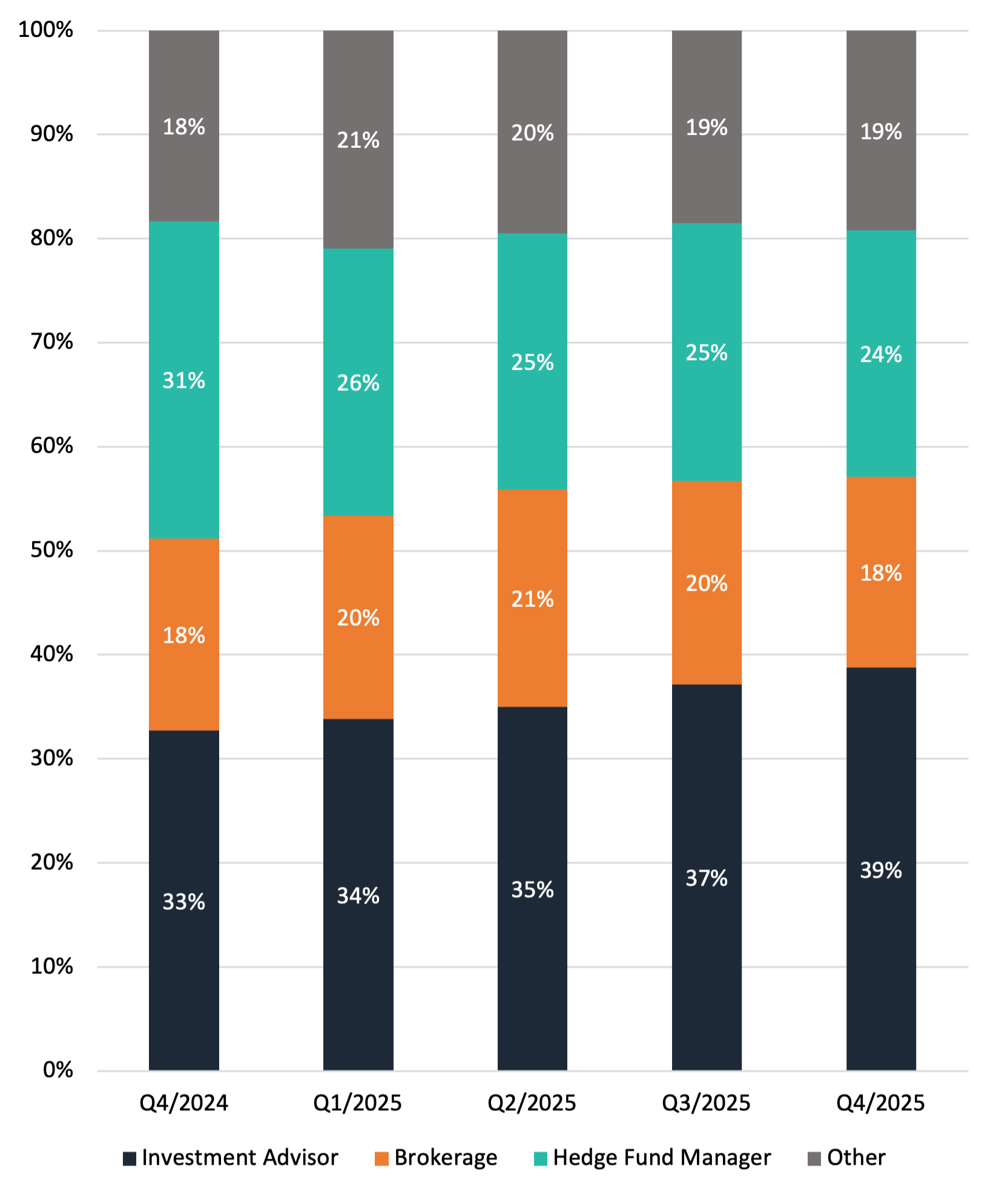
This is the maturation pattern that Bitcoin bulls have long predicted, and it's playing out even as prices correct. The question is whether this structural bid from the advisory channel is sufficient to absorb the supply being released by hedge fund de-risking. At $67,000, the market appears to still be working through that transition.
We will continue to monitor the distribution of ETF holders as filings roll in over the coming weeks, with particular attention to whether the advisory accumulation trend holds at these lower price levels and whether additional sovereign and institutional entrants emerge. For our broader view on where crypto markets go from here, including our macro outlook, key price levels to watch, and the on-chain signals we are tracking, look out for our upcoming CF Benchmarks' Market Outlook, publishing next month.
Note: Data sourced from Bloomberg 13F ownership screens. Holdings represent top institutional holders as reported in quarterly 13F filings. Dollar values estimated using approximate ETF share prices at quarter-end. This analysis does not constitute investment advice.
The information contained within is for educational and informational purposes ONLY. It is not intended nor should it be considered an invitation or inducement to buy or sell any of the underlying instruments cited including but not limited to cryptoassets, financial instruments or any instruments that reference any index provided by CF Benchmarks Ltd. This communication is not intended to persuade or incite you to buy or sell security or securities noted within. Any commentary provided is the opinion of the author and should not be considered a personalised recommendation. Please contact your financial adviser or professional before making an investment decision.
Note: Some of the underlying instruments cited within this material may be restricted to certain customer categories in certain jurisdictions.
Factor Friday - October 9, 2026
Size led CF Benchmarks' factor table for a second week at 2.58% as the Market fell 4.98%. Size held after QNT's reversal, though its cohort spread narrows sharply without three outlier tokens, and Downside Beta and Liquidity gave back part of last week's gains.

Mark Pilipczuk
Small Cap Tokens Outperform in September
The CF Free-Float Broad Cap Index rose 10.28% in September as Bitcoin supplied 59% of the gain while trailing the index. Returns across the Capitalization Series ran from +7.74% for Ultra Cap 5 to +14.01% for Emerging Crypto, which holds no Bitcoin, as altcoins outpaced Bitcoin.
Mark Pilipczuk
CF Digital Asset Index Family Multi Asset Series – Extraordinary Rebalance Announcement
CF Digital Asset Index Family Multi Asset Series - Extraordinary Rebalance Announcement
CF Benchmarks
By clicking Accept, you consent to CF Benchmarks's use of cookies.
Visit Cookie Settings to learn how CF Benchmarks uses cookies and to adjust your preferences.