
Oct 29, 2026
How CF Benchmarks treats a Bitcoin hard fork: the ECX case
A new network called eCash (ECX) forked from Bitcoin at block 973,728 on Thursday 29 October. It copied Bitcoin's ledger and allocated 1 ECX for almost every bitcoin (BTC) held at the snapshot. Bitcoin itself is unchanged and keeps its ticker. Under the CME CF Hard Fork Policy, the CME CF Bitcoin Reference Rate (BRR) and its variants continue to observe BTC-USD, regardless of how ECX trades or whether it qualifies for any index treatment.
For index users, the open questions are narrow and mechanical. First, does the fork meet the definition of a hard fork event, which the CME CF Hard Fork Policy and the CF Multi Asset Series Ground Rules share? Second, if it does, does ECX clear the thresholds that decide whether it earns an index of its own? Third, does it clear the separate thresholds that would treat it as a distribution to Bitcoin holders in multi-asset indices? Our working view is that ECX meets the definition on its design. Both chains are being mined, and we are confirming how the reasonable speed condition reads for ECX's first blocks. Whether it clears either set of thresholds will depend on trading activity in the first days, and we will measure that rather than assume it.
What ECX is
ECX is a hard fork of Bitcoin developed by LayerTwo Labs, a company led by Paul Sztorc. Its purpose is to activate drivechains, a design for optional sidechains secured by Bitcoin miners, set out in Bitcoin Improvement Proposals (BIPs) 300 and 301. Those proposals did not gather enough support to activate on Bitcoin through a soft fork, which is a backward-compatible rule change, so the developers chose to launch them on a separate chain. The project has described sidechains for uses such as payments, shielded transactions, token issuance and prediction markets.
The mechanics matter for index treatment. ECX copied Bitcoin's transaction ledger through block 973,727 and split from Bitcoin at block 973,728, at about 19:00 London time on 29 October. Holders of BTC in wallets they control are allocated ECX one for one, and holders on exchanges depend on their exchange's policy. ECX keeps Bitcoin's SHA-256d proof of work, so Bitcoin miners can mine both chains, and it resets mining difficulty to the minimum at launch before returning to normal adjustment. Three features set it apart from a plain copy. First, according to project material, about 500,000 ECX that would otherwise sit at early, Satoshi-era addresses are reassigned to investors under ECX's own rules. The bitcoin at those addresses is unaffected. Second, replay protection is opt-in, so a Bitcoin transaction can also be valid on ECX unless the holder protects it. Third, the alpha and beta phases earlier in the rollout issued practice coins (pECX). Project material says these can be burned and exchanged for mainnet ECX, at a reported 1,000 pECX to 10 ECX, so some mainnet supply would not map one for one to BTC held at the snapshot.
ECX has no established market price at the time of writing. It is unrelated to XEC, the older token from the Bitcoin Cash lineage that also uses the eCash name.
What does not change
The Hard Fork Policy settles this by definition. It defines the Original Token as the token that constituent exchanges continue to trade under the symbol in use before the fork. For Bitcoin, that is BTC. The BRR, its New York and Asia Pacific variants (BRRNY and BRRAP), and the CME CF Bitcoin Real Time Index (BRTI) therefore continue to observe BTC-USD trades on constituent exchanges. Their inputs, calculation and publication do not change. This holds in every outcome. If ECX is not deemed significant, nothing changes. If it is deemed significant, the Policy provides for a New Index on the New Token Pair. That would be a separate ECX-USD benchmark, not an adjustment to the BRR, and ECX trades never enter the BRR. Products that reference the BRR, including CME Bitcoin futures and options, are unaffected.
Step one: is it a hard fork event?
Two rulebooks apply: the CME CF Hard Fork Policy, which covers every CME CF Cryptocurrency Pricing Product, and the CF Digital Asset Index Family Multi Asset Series Ground Rules. Both begin with the same definition. Each treats a fork as a hard fork event only if three conditions hold. Two or more diverging blockchains share the same pre-fork history. The tokens on the post-fork chains are non-fungible across chains. And the respective blockchains are actively mined, so that transactions can be processed at reasonable speed.
Figure 1 sets out the test. A failure at any step ends the process, existing benchmarks are unchanged, and there is no index action. Passing all three opens two separate questions, each with its own rulebook.
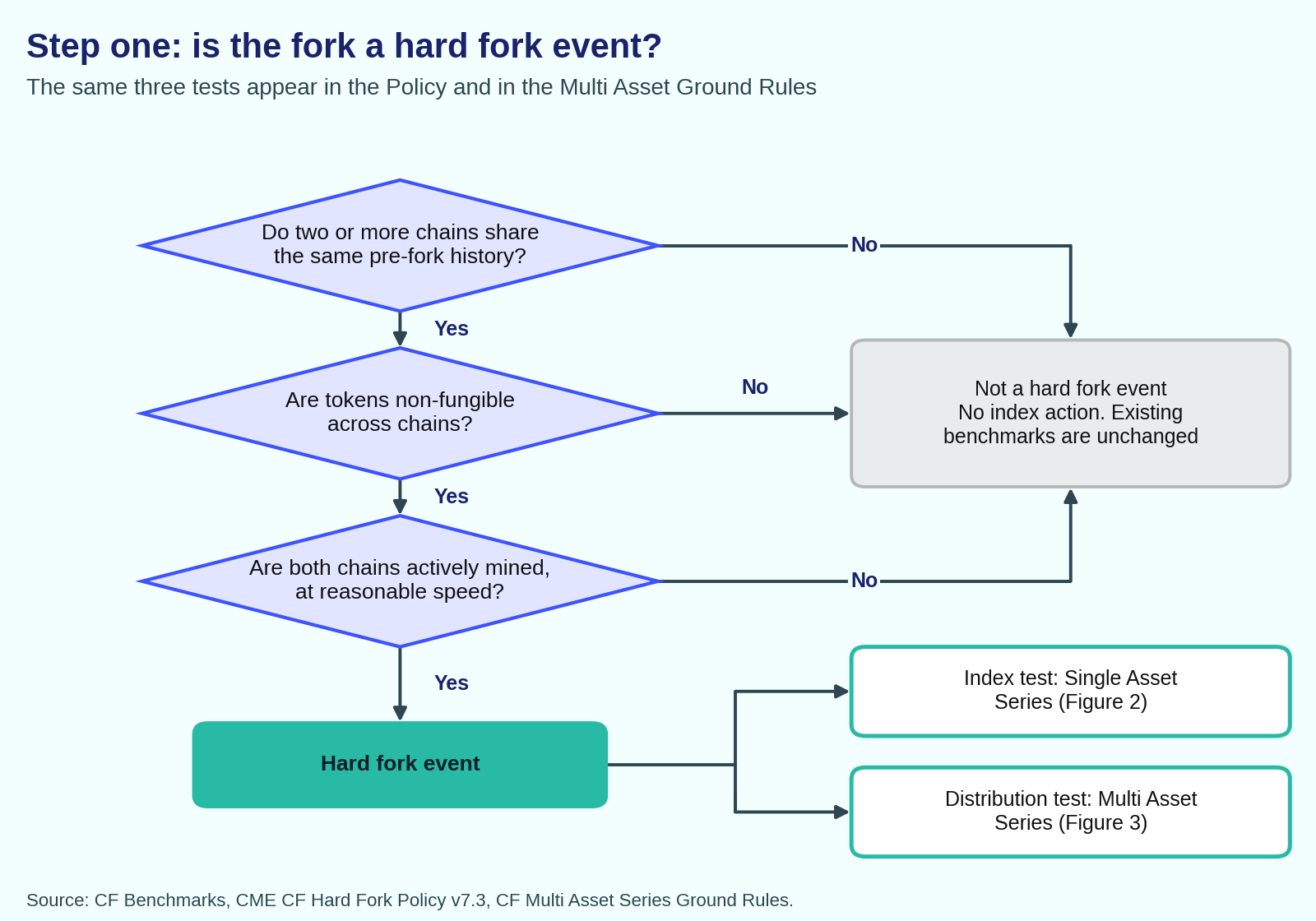
Table 1 maps ECX against the three conditions. The first two are met by design, because ECX begins as a copy of Bitcoin's ledger and has no backward compatibility with it. The third could only be observed after launch. ECX resets difficulty to the minimum at launch, so early blocks arrive far faster than Bitcoin's ten-minute target until difficulty adjusts. In the alpha phase, the test chain was reported to produce more than 25,000 blocks in about 13 hours. Mainnet has followed the same pattern. By 21:20 London time on 29 October, about two hours and twenty minutes after the split, ECX had produced about 3,500 blocks against 16 on Bitcoin. Both chains are being mined, and we will record how we read the reasonable speed criterion for those early days.

Two rulebooks, two questions
Once a fork qualifies, the two rulebooks ask different questions over different windows.
The CME CF Single Asset Series asks whether the new token should have an index of its own. Nothing changes for Bitcoin benchmarks, as set out above. The Hard Fork Policy deems a new token significant if it meets four criteria on at least 2 of the first 7 Days after the fork, where a Day runs from 00:00 to 23:59:59 London time. If the token is not deemed significant, launching an index is at the Administrator's discretion.
The CF Multi Asset Series asks whether the new token is a distribution to existing holders of Bitcoin. If the conditions in section 8.3.3 of the Ground Rules are met, the new token is treated as a distribution, in the way a dividend is treated in an equity index. Only total return variants record it. Price return variants never incorporate distributions.
Table 2 compares the two. Three differences matter. The windows differ. The Single Asset test looks across the first seven calendar Days, while the Multi Asset test is one check on the seventh working day. The volume bases also differ. The Single Asset test measures the new token against the combined volume of both tokens, at 10%, while the Multi Asset test measures it against the original asset's volume alone, at 5%. And the Multi Asset test adds holder conditions about how the new asset is claimed, which the Single Asset test does not.

Decision path 1: does ECX earn its own index?
Figure 2 shows the path under the CME CF Single Asset Series. Each Day in the window, the Administrator checks four criteria: the new token pair trades on at least 2 constituent exchanges, there are at least 100 trades across them, the new token's price is at least 10% of the combined price, and its volume is at least 10% of the combined volume. All four must hold on the same Day, and on at least two of the first seven Days. That means a token can be deemed significant as early as Day 2, and ruled out once two qualifying Days are no longer possible, which is no later than the close of Day 7.
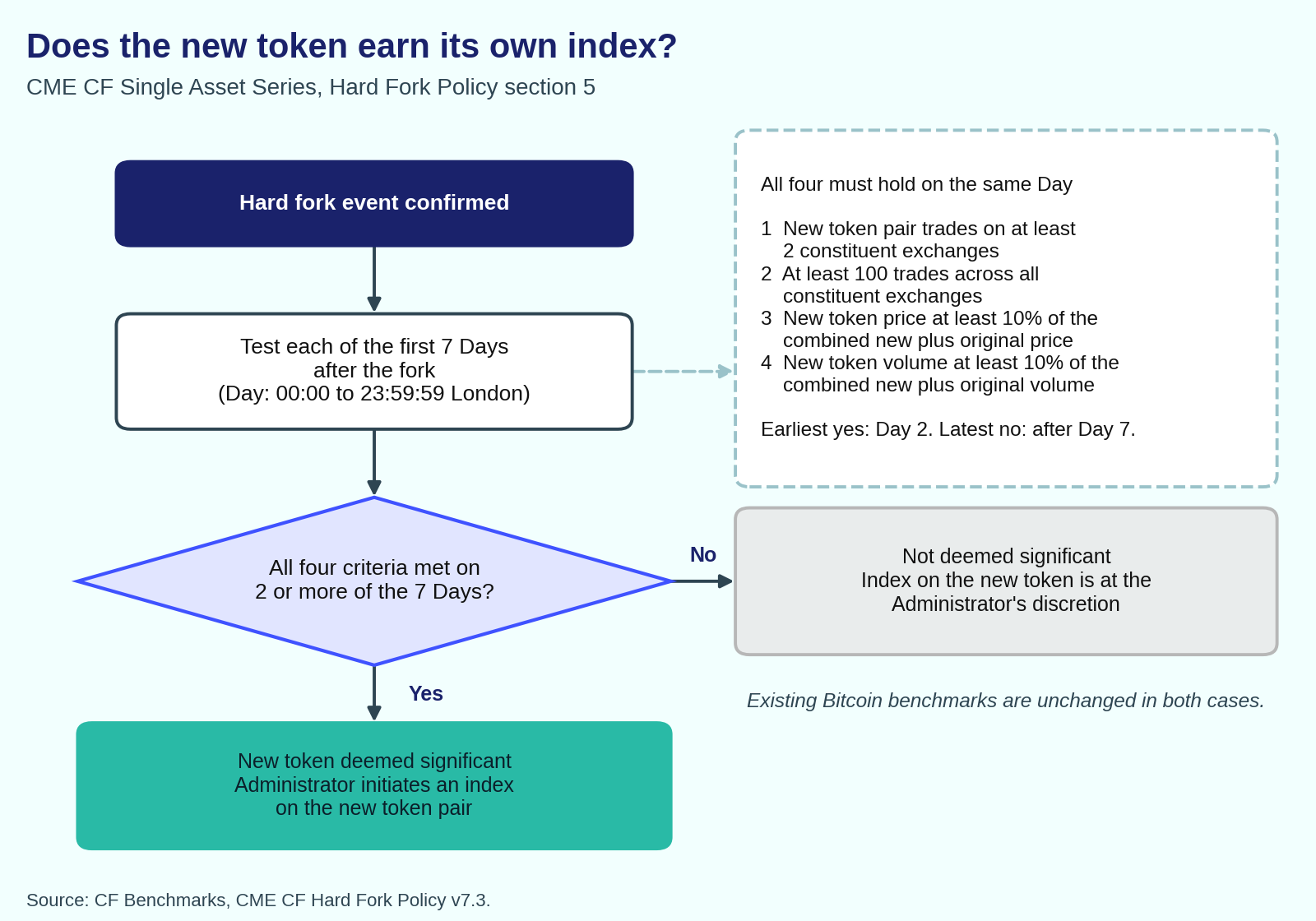
The price and volume criteria are written as a share of the combined total, and that has a precise consequence. Policy section 6 defines Price as the volume weighted average price across constituent exchanges on a given Day. On our reading, the combined Price is the sum of the two tokens' Prices, so a new token at 10% of it must trade at no less than one ninth of the original token's price. With Bitcoin near $80,000, an illustrative level, that implies an ECX price of roughly $8,900. The same arithmetic applies to volume, so ECX would need to trade at least 11.1% of Bitcoin's volume on constituent exchanges. The one for one allocation does not set a price. The market does, and ECX has none yet.
Only constituent exchange activity counts, so a token that does not list on at least two constituent exchanges cannot pass, whatever happens elsewhere. If ECX is deemed significant, the Administrator initiates calculation and dissemination of an index on the new token pair, which would be an ECX-USD index.
The two-exchange requirement has decided an earlier case. In 2022, the proof-of-work token ETHW that followed Ethereum's move to proof of stake traded on only one CME CF constituent exchange, so the fork was not material (the Policy's term at the time) and no ETHW benchmark was published. CF Benchmarks assessed the Bitcoin Cash split of November 2020 under an earlier version of the Policy and found the new token, quoted at a small fraction of Bitcoin Cash's $253 price, unlikely to meet the price criterion.
Decision path 2: is ECX a distribution to Bitcoin holders?
Figure 3 shows the path under the Multi Asset Series Ground Rules. The test runs in two stages. Immediately after the fork, three holder conditions must hold: the new asset is fungible with no impediments, private keys are the only requirement to claim it, and it corresponds one to one with the original asset. On the seventh working day, three market conditions must hold: the new chain is still actively mined, two or more constituent exchanges have listed the token against the index base currency in the preceding three working days, and trading volume over those days is at least 5% of the original asset's volume across constituent exchanges.
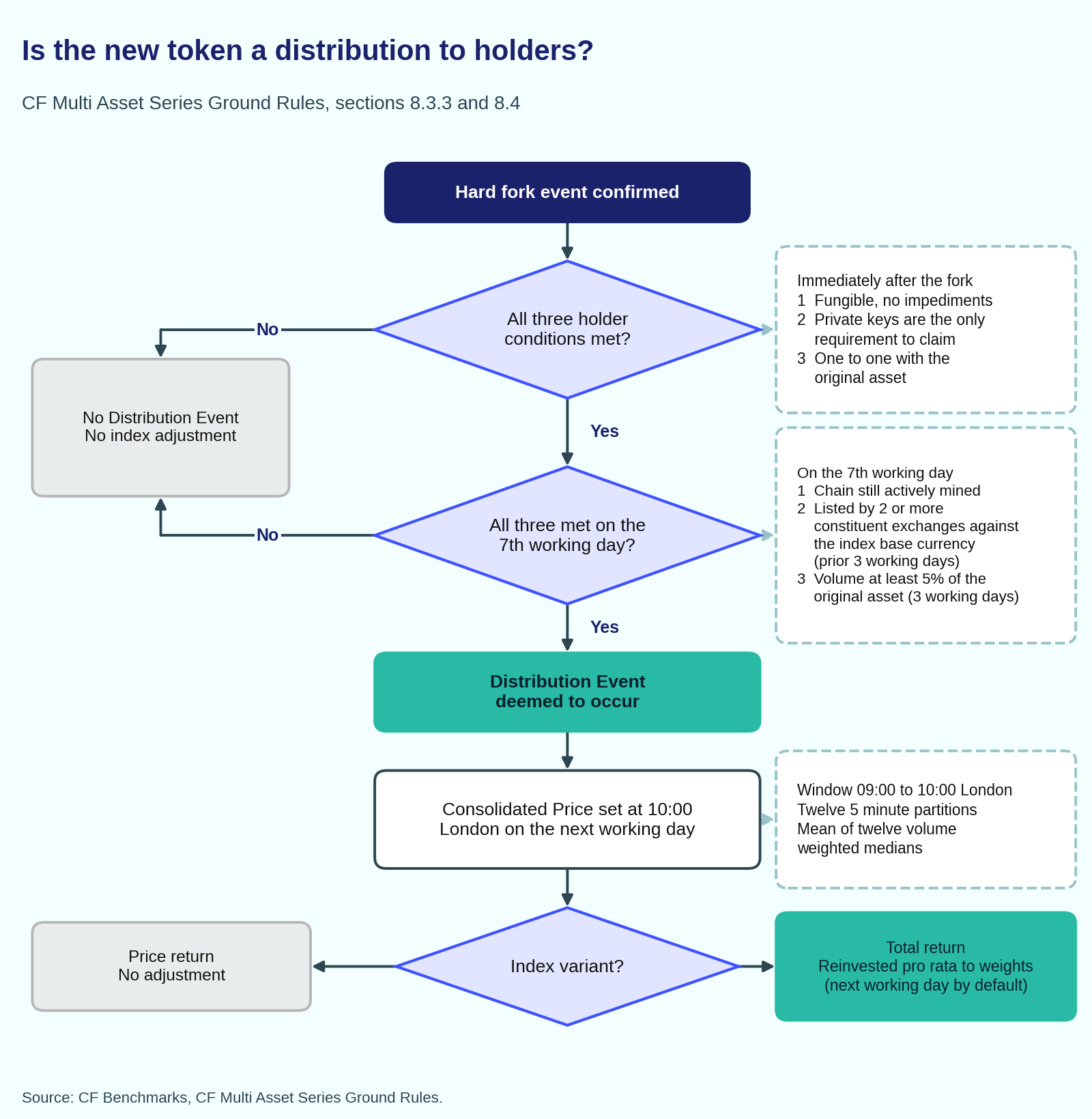
The holder conditions turn on custody and design. ECX's allocation is keyed to Bitcoin addresses at the snapshot, which fits the keys-only condition for ordinary holders. The redirection of early coins, the pECX redemption and the opt-in replay protection are the features most likely to be tested against the one to one and fungibility conditions, and we will assess them against the Ground Rules text after the fork, with the result confirmed on the seventh working day. Fungible here concerns the new asset itself. It is a different sense of the word from the hard fork definition, where non-fungible means a token on one chain cannot stand in for the token on the other.
If every condition holds, a Distribution Event is deemed to occur on that day. The Administrator then sets a Consolidated Price at 10:00 London on the next working day, using trades between 09:00 and 10:00 split into twelve five-minute partitions. The Consolidated Price is the mean of the twelve volume-weighted medians. Multiplying it by the distribution quantity gives the Distribution Proceeds. In a total return index, the proceeds are reinvested pro rata to constituent weights at the reinvestment point, which is the next working day after the Event unless the index specifies otherwise (Ground Rules sections 7.2 and 7.3). Price return variants record nothing. If any condition fails, no Distribution Event occurs and no index adjusts.
The calendar
Figure 4 maps the decision dates onto a calendar. The fork came at block 973,728 at about 19:00 London time on Thursday 29 October, earlier than the public estimates of 30 October to 1 November.
Sections 7 and 8 of the Ground Rules do not define a working day, and section 2 defines a business day as one on which banks in both the UK and the US are open. No UK or US bank holiday falls between 30 October and 10 November, so the dates below are the same whether working days are read as London business days or under the UK and US definition.
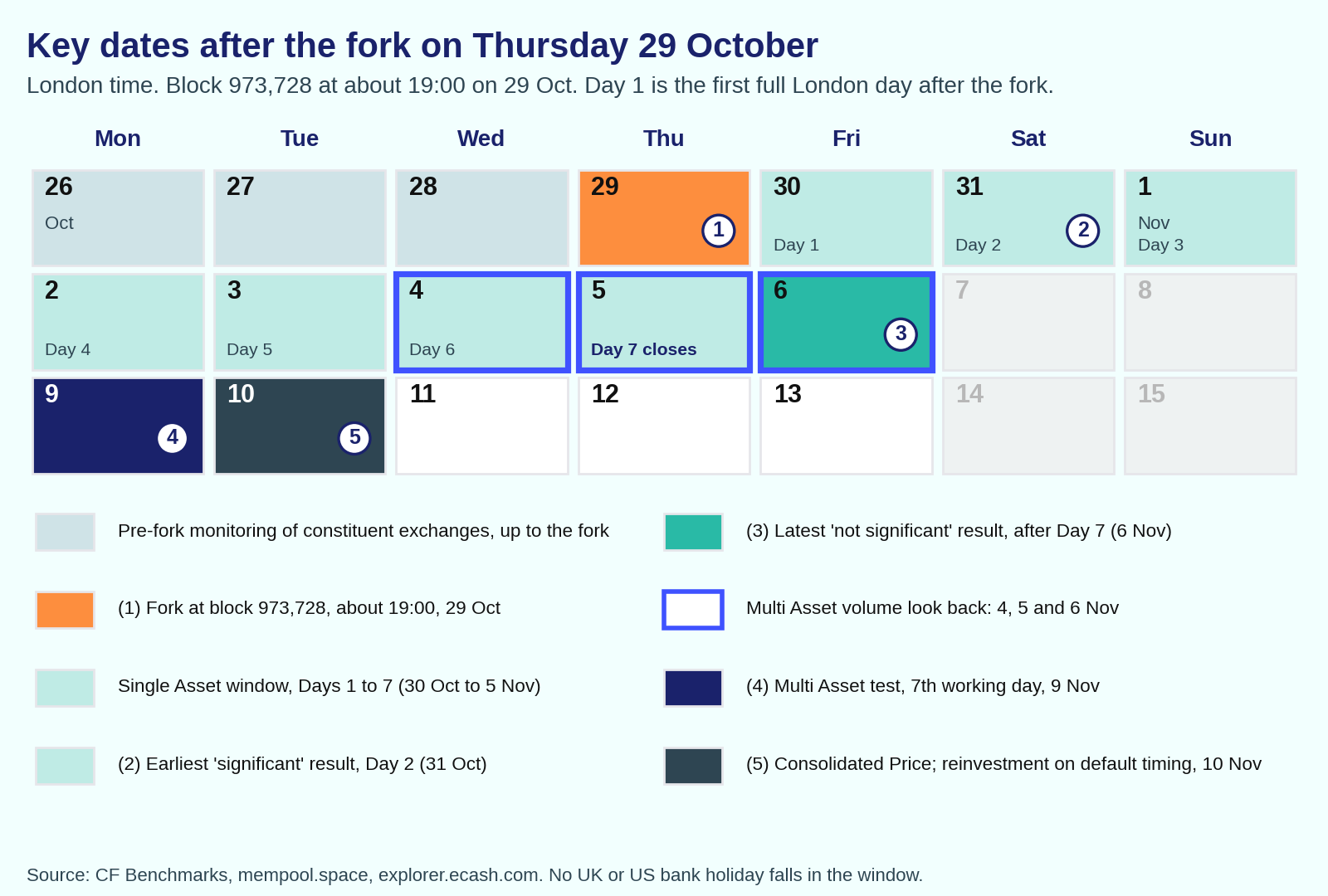
Up to the fork, the Administrator monitored constituent exchanges for ECX markets. We read Day 1 as the first full London day after the fork, 30 October, because the Policy defines a Day as 00:00 to 23:59:59 and the fork landed partway through 29 October. The Single Asset window therefore covers 30 October to 5 November. ECX could be deemed significant as early as Day 2, 31 October, if it meets all four criteria on both days. If no Day has qualified by the close of Day 6 on 4 November, ECX can no longer be deemed significant. In every other case the outcome is settled no later than the close of Day 7, at 23:59:59 London on 5 November, so 6 November at the latest.
The Multi Asset test falls on the seventh working day after the fork, which is Monday 9 November on our count (30 October and 2, 3, 4, 5, 6 and 9 November). On our reading it looks back over the preceding three working days, 4, 5 and 6 November, for listings and volume. If a Distribution Event occurs on 9 November, the Consolidated Price is set at 10:00 London on Tuesday 10 November. On the default timing in sections 7.2 and 7.3 of the Ground Rules, reinvestment follows on 10 November. An index can specify a different point, and an Event counts toward a reinvestment window only if it occurred at least one working day before that window opens, so the step can land later for some indices.
An illustrative distribution
To show how a qualifying distribution would reach an index, take a hypothetical total return index at 1,000 points with a 50% Bitcoin weight. Hold every constituent price constant, so that the distribution is the only thing that moves the level. Each bitcoin held earns one ECX. The proceeds are the number of ECX received multiplied by the Consolidated Price, so as a share of the index they equal the Bitcoin weight multiplied by the ratio of the ECX price to the Bitcoin price.
Table 3 runs three cases, with ECX priced at 2%, 5% and 11.1% (one ninth) of the Bitcoin price. The last is the level at which ECX would just meet the Single Asset price criterion, which ties the two tests together. These are arithmetic examples, not forecasts, and ECX has no established price.
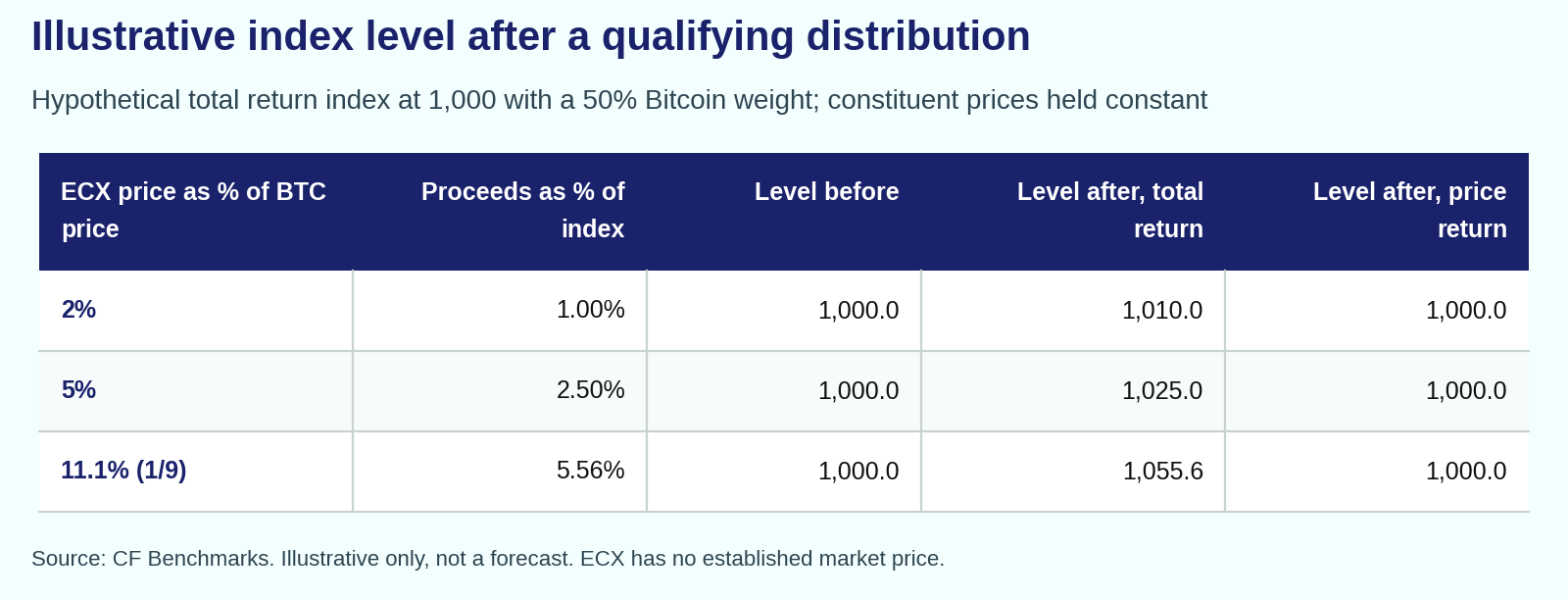
Figure 5 shows the timing on the default reinvestment rules. The level is flat until the Distribution Event on 9 November. The step appears on 10 November, when the Consolidated Price is set and the proceeds are reinvested. An index that specifies a different reinvestment point, or that opens its next reinvestment window later, would show the same step on a later date.
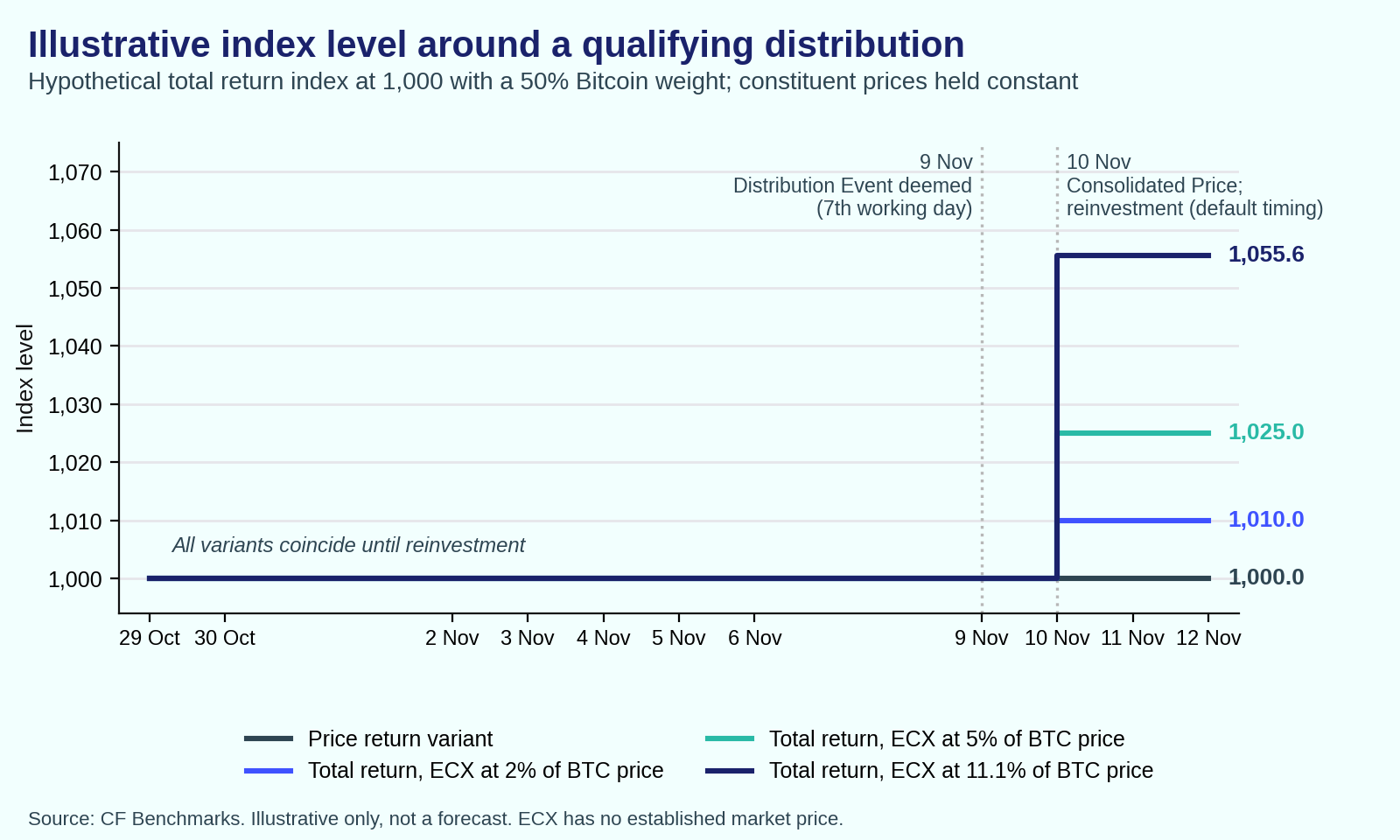
Reinvestment is pro rata, so constituent weights are the same after the step as before it. With prices held constant, the index level rises, nothing else changes, and the price return variant stays at 1,000 throughout. The size of the step depends on two inputs only, the Bitcoin weight and the ECX-to-Bitcoin price ratio. At a 25% Bitcoin weight, the three cases would add 0.50%, 1.25% and 2.78%.
The constant-price assumption isolates the mechanics and is unlikely to hold in practice. ECX is value split from BTC, so the BTC price may adjust around the snapshot. If it does, the price return variant falls with it, and the total return step on reinvestment partly offsets that move rather than adding to it. Between the snapshot and the reinvestment point, the total return index holds BTC without the ECX it has accrued, so for those working days it does not reflect the full value of the position.
Takeaway for index users
The ECX fork is a useful test because the outcome does not depend on a view. The thresholds are published, they are applied to observed trading on constituent exchanges, and the decision dates are known in advance. CF Benchmarks takes no position on whether ECX has merit, and the same thresholds apply to any new token, whatever its prospects.
Three observations follow for allocators and licensees. First, nothing changes for products that reference Bitcoin benchmarks. The BRR and its variants observe BTC-USD whatever the outcome. Second, the information that decides both tests is listing and activity on constituent exchanges in the first week after the fork. Third, users of total return multi-asset indices would see a Distribution Event determined on 9 November if ECX qualifies, and a step in the index level equal to the Bitcoin weight multiplied by the ECX-to-Bitcoin price ratio. On default timing the step is applied on 10 November, and later where an index specifies a different reinvestment point. If the thresholds are not met, nothing adjusts.
The information contained within is for educational and informational purposes ONLY. It is not intended nor should it be considered an invitation or inducement to buy or sell any of the underlying instruments cited including but not limited to cryptoassets, financial instruments or any instruments that reference any index provided by CF Benchmarks Ltd. This communication is not intended to persuade or incite you to buy or sell security or securities noted within. Any commentary provided is the opinion of the author and should not be considered a personalised recommendation. Please contact your financial adviser or professional before making an investment decision.
Note: Some of the underlying instruments cited within this material may be restricted to certain customer categories in certain jurisdictions.
How CF Benchmarks treats a Bitcoin hard fork: the ECX case
Published thresholds, applied to observed trading, decide whether a new coin earns an index of its own or counts as a distribution in multi-asset indices. The eCash (ECX) fork around 31 October is a live test of both.

Mark Pilipczuk
CF Institutional Digital Asset Index – Update on the Q3 2026 Reconstitution and Rebalance
Further to the announcement of August 28th, 2026, the Administrator announces that the postponed Q3 2026 Reconstitution and Rebalance of the CF Institutional Digital Asset Index (IDAX) will not be implemented. The Q3 2026 Reconstitution and Rebalance is therefore suspended.
CF Benchmarks
Changes to the Token Market Price Benchmarks Series - Market Prices – 27 October 2026
Changes to the Token Market Price Benchmarks Series - Market Prices – 27 October 2026
CF Benchmarks
By clicking Accept, you consent to CF Benchmarks's use of cookies.
Visit Cookie Settings to learn how CF Benchmarks uses cookies and to adjust your preferences.